
Yes, it's been super quiet here at the Upskill blog. I actually never posted in 2014. Is that bad?
On a positive note, I have been doing heaps of climbing. The 2013 and 2014 seasons are some of the most fun climbing I've had in the SE Queensland region, ever. You know I love new routing. For those two years, all my energy outside work was funneled into developing three major new cliffs in the Urbenville region of northern NSW: Vesuvius, Spot X and Crossroads.
Between the three crags, we established 71 routes. 20+ of these were over 40m in length. It was epic.
All this action is a mere two hour drive from Brisbane. I put lots of k's on the car. But so, so worth it. All info for all three crags is now available on theCrag.com, and the season is just starting. If you live in Brisbane, 2015 could be your Urbenville year. It's the Catalunya of Queensland.
I capped off both prolific seasons with a hard first ascent. The second of these was Vixen 32. I was really pleased to vision, and then eventually climb this extremely overhanging, blank looking wall. The movement on it is super good - one of the most fun routes I've done. Erik filmed on it using his ingenious RopeClimber camera, and EpicTV ended up picking up the video. 200,000+ views later, and lots of people have now seen Spot X, even if they'll never climb there. Watch the vid.
Townsville, located in North Queensland strikes fear into the hearts of hipsters and the trendy southern yuppie, but it holds a special place in my heart as I began my climbing career in Townsville while at University.
The most well-known crag Mount Stuart occupied most of my time, and though Frederick Peak was visible to the north west of the city, gates and 4WD access kept it out of my cross-hairs. Another 10 years, and these minor inconveniences have been overcome, and a new generation of climbers have been blessed with a greenfields playground for establishing new routes in almost every style.
It's true, the remote location and slightly tricky access will ensure this crag never be crowded, but for the climbers of the region, Frederick Peak is a major drawcard. Based on number of routes, uniqueness and quality, it's probably Australia's most significant new crag "discovery" in the last 10 years.
I've been back a couple of times (read about the first here), hosted by the Three Monkeys, who are a triple-barbed missile of bad heavy-metal music and new routing enthusiasm. On both trips I was able to put up some great routes, and repeat some great routes too.
On the last trip, we also teamed up with the indomitable Gareth Llewellin who was keen to use his new camera to capture some pics and video. The video he put together was an introduction to the area, and contains a rather lengthy and somewhat embarrassing monologue by me. This was featured in Vertical Life magazine issue 4. Scroll down for the video, and grab issue #4 of Vertical Life while you're at it. Good stuff, and free. How do they do it?
 |
| Download PDF of issue 4 |
 |
| Profiled on the Vertical Life site Me repeating Monty's terrific 'White Gold' extension 27, Frederick Peak (c) Gareth Llewellin |
Climbing in Townsville - Winter 2012 from Gareth Llewellin on Vimeo.
And if that's got you Frederick-frothing, check out the guidebook:
 |
| Download PDF |
An analysis of climbing on the island of Kalymnos with respect to new routes, the safety of fixed hardware, and route maintenance now and in the future
Posted by Lee Cujes Labels: Bolting, Kalymnos, New RoutesPreface:
I love Kalymnos, and I care about the future of climbing on the island. I wrote this paper in 2010 and submitted it for consideration by some of the key climbers and rebolters on Kalymnos, and I was keen for the Municipality to see it also. With news of the upcoming "bolting festival" in October-November 2013, I now publish the paper as an "open letter" to any and all interested parties.
An analysis of climbing on the island of Kalymnos with respect to new routes, the safety of fixed hardware, and route maintenance now and in the future.
Lee Cujes, 2 June 2010-- Aris Theodoropolous, Guidebook author and Kalymnos route developer
Issue: Route volume and quality
The number of new routes being established per year on Kalymnos is not decreasing. We have ~2300+ routes on Kalymnos already, with more every year. As more of the available rock is developed, we would expect to see (and encourage) fewer routes being established each year. It is important to encourage quality rather than quantity, as poor quality routes decrease the overall quality of Kalymnos climbing. Furthermore, doubling the number of routes on the island will not double the number of climbers, nor will it double revenue for the island. Nor will it even spread the impact of climbing – 90% of climbers into the future will continue to climb at only the major existing sectors, as it is these sectors which offer the highest quality climbing.
Recommendations:
- Withdraw Municipality funding for new routes [edit: it is my understanding that this has happened some years ago, however corporate sponsorship of foreign route developers continues]. This was useful in the birth phase of Kalymnos climbing as it encouraged rapid development, but we are beyond this phase now.
- Channel funds from all existing bolt funds that may exist on the island (example - Glaros) into rebolting, rather than new routing (ensuring climbers who donate know what they are donating for). As elsewhere in the world, motivated new routers will fund their own routes. We should see the number of new routes decrease to a more sensible level, and the quality of routes maintaining a high standard.
Bolts are not permanent. Especially on limestone and near the sea, we see significant corrosion within just a couple of years. This is also true in areas where the water transfer through the rock is high (i.e. anywhere with tufas e.g. Grande Grotta, Ghost Kitchen etc.) It is vital that routes are inspected and rebolted as required.
 |
Figure 1: Unsafe, corroded anchor at Ghost Kitchen |
 |
| Figure 2: Corrosion can also occur because of two dissimilar metals as shown here on a relatively new route on the Vathy road sector |
 |
| Figure 3: Climbers are too afraid to trust this corroded anchor on Ghost Kitchen. They tie their own slings and carabiner as backup |
Hardware Issue #2: Wear of hardware on fixed routes
- Anchors in certain areas receive a lot of wear (the rope wears and cuts into the metal) and need to be replaced regularly, in some cases every year. There has recently been some analysis from Black Diamond showing how worn carabiners can cut rope.
- Bolts that are repeatedly fallen on can loosen in the hole and deform, especially in softer or more 'active' limestone. This can lead to failure of the bolt.
 |
| Figure 4: Dangerously worn lower-off anchor. |
The trubolt is the most typical bolt used on most Kalymnos routes. However, it is not the best choice.
 |
| Figure 4: Trubolt |
- Easy and quick to place
- Can be used immediately (important for equipping steep routes)
- Cannot be extracted from the hole to allow for clean replacement. Must be cut off using a cordless grinder and then beaten back into hole and the hole patched with epoxy and camouflaged.
- Because the thread sits exposed from the nut, it can foul the carabiner leading to dangerous orientation of the carabiner. There are cases where this has led to a carabiner snapping.
- Sideways forces on the hanger cause the nut to loosen. If the nut loosens completely, the hanger falls off and the climber has no protection. This happened to me recently during a fall. I was very lucky to escape injury. Many routes are missing hangers due to this issue.
Recommendations:
 |
| Figure 5: Titanium glue-in bolt. The best long-term solution. To purchase these, visit: http://www.titanclimbing.com |
Option 1 (mandatory): Continual assessment and rebolting with high grade (316) stainless steel as required. "316 L" is the low carbon version of 316 stainless steel and has been found to have even better corrosion resistance. Hardware is available in 316 L.
Option 2 (possible): Thailand climbing areas have moved to titanium glue-in bolts and Hilti RE-500 epoxy glue for maximum corrosion resistance and longevity. It is suggested Kalymnos also obtain these (more expensive) bolts for use on the most corrosive sectors.
2. Wear
 |
|
Figure 6: An anchor is replaced,
leaving bolt remains and ugly scars on the rock. This is unnecessary, yet this kind of damage is widespread. |
3. Bolt choice
For new routes, discontinue using trubolts. Instead, use 12mm x 75mm flush-head dynabolts of the following configuration:
 |
| Figure 7: 12mm Flush-head dynabolt - a better choice than trubolts. |
Flush-heads offer all the advantages of the trubolt, and eliminate many of the disadvantages. They are replaceable, they have a low profile and do not snag carabiners as readily, and they do not loosen as easily as trubolts.
Issue: Maintenance and rebolting
Kalymnos has a reputation as a haven of ‘safe bolting’. This is important to many climbers who come here and is a reputation worth protecting.
Rebolting is happening on the island, however the following issues have been identified:
- The poor quality of some of the rebolting work
- The fact that trubolts are being replaced with more trubolts, instead of taking the opportunity to upgrade to the best, highest-longevity solution (glue-in ringbolts)
- The fact that there is not enough rebolting occurring to keep up with the wear and corrosion on the ever-increasing number of routes on the island. The generally thankless task of rebolting is left to just a few motivated individuals.
 |
| Figure 8: Seven holes drilled and not patched. Poets sector. |
 |
| Figure 9: Too often this is the case (we see this at every sector). Because trubolts cannot be extracted, they are left to rust. This is unsightly and simply lazy. |
1. Quality:
For Kalymnos to retain its reputation and natural beauty, it is inappropriate to allow sub-standard rebolting. Trubolts must be cut, recessed and patched. Old anchors need to be removed in full. Any scars on the rock must be camoflauged. We must strive for all routes to be as perfect as they can be.
2. Phasing out trubolts:
We must rebolt with superior hardware. Therefore we must move to glue-in bolts. These are preferred by all climbers because they are stronger, safer, do not notch climbers’ carabiners, and allow for rope to be directly threaded to allow for retreat from any point on the route if required. They do require more skill to place, but most importantly, they will last much longer in this environment than any form of expansion bolt. In this seaside environment, a minimum specification of 316 or 316 L stainless steel should be mandated, with titanium preferred as the best possible option (see: Thailand titanium rebolting article).
 |
| Figure 10: 316 stainless glue-in ringbolt, correctly recessed. |
- Online and offline method for climbers to report “bad bolts/routes” for inspection.
- Online “to-do” list with routes and sectors scheduled for rebolting/maintenance.
- Online and offline methods for visiting climbers to donate money to the rebolting initiative. If even a small fraction of the money entering the Kalymnian economy by climbers went towards rebolting, this would ensure the initiative could be appropriately funded.
- Online database of rebolted routes to show how the money is being spent, exactly what hardware is used etc. (Example of such a database)
One or more rebolting specialists must be engaged by the Municipality (or corporate sponsors) to conduct the required work every year, on an ongoing basis. The Municipality has spent a great deal of money establishing Kalymnos as one of the world’s premier climbing destinations (by investing in new routes), however we must continue to maintain and protect that investment in the long term. This requires an ongoing financial commitment.
Conclusion
I would like to offer thanks and gratitude to those climbers such as Aris Theodoropolous and Simon Montmory who have contributed serious time and effort to rebolting on Kalymnos. This article is not a criticism, rather a call to action.
I believe a combination of both local commitment (Municipality), corporate commitment (sponsored initiatives) and commitment from climbers themselves (via donations) will provide the assistance necessary to fund the recommendations in this article.
As the world's premier sport climbing destination, Kalymnos deserves ongoing care and ongoing investment.
Other resources:
- Safer Cliffs bolt guide
- UKC Article - Bad Bolts on Kalymnos - 2011
- UKC Article - INTERVIEW: Kalymnos Bolt Fund exceeds €10,000 - 2010
- Climb Kalymnos - New Route Guidelines for Kalymnos
- Climb Kalymnos - Anchor Replacement - facts and figures
So I had wedding duties this weekend. New shoes, pimped up suit, the whole bit. But I did manage to sneak away for a few hours. There was a project I equipped earlier in the year at Ninderry but struggled with it due to some slick holds on the crux which summer did not agree with. I was hoping cooler conditions might be the trick.
Unfortunately when we arrived it was a waterfall up top and the final six metres was soaked. We didn't have a backup plan, so forged on regardless, and with the assistance of lots of chalk and rags, we got it dry enough to climb. Most of the crux holds were dry, but the easier top section remained very wet. Spicy!
Luckily as the day ticked away the route got slightly more dry, and eventually a breeze kicked in and we got a tiny window of perfect conditions. I pounced and managed to get it done. Psyched! Another one in the bag.
Semtex 15m 29
Really cool low dyno (unless you're Long-arms Schimke), then a baffling upper crux which I solved with some knee-trickery. Hard to grade as the sequence is short, but hard/bizarre.
 |
| Slipping off the still-spoogy crux hold. |
 |
| I actually did hold it this time. Between the knee and a slight pinch, it's just enough to stay on. |
 |
| When you do it well it looks like this. |
 |
| The top section. Hopefully a formality from here, but maybe not if it's dripping with water. |
World Climbing - Rock Odyssey, by Simon Carter
Posted by Lee Cujes Labels: Climbing Camp: 2009 Vietnam, In The Press, New RoutesIn November 2010 we took the opportunity to head back to Vietnam to climb, DWS, bolt new routes, and shoot photos with our friends Simon Carter and Monique Forestier (and a host of others). Simon was interested in profiling the climbing in Vietnam in his upcoming book and 2012 calendar, and we were happy to help out and share what we'd discovered about the climbing there.
As soon as I'd told Simon about my plans for an extension on License To Climb, he was psyched. It didn't take long before we were out there, climbing scary sharp trad to get to the top of the formation and suss out my dream line. As I gingerly rapped over the razor sharp limestone edge, I had high hopes. Within roughly 60 seconds, I was bummed out. The rock up high was crap. Flaky, friable crap. Everything that looked like a hold I managed to rip off in my hand. I was never going to get the 50m pitch I was hoping for. As I descended though, metre by metre, the rock quality improved. Suddenly my spirits lifted as I began piecing together a possible series of moves upwards from the existing chains. Upwards... but how far, and to where?
 |
| Me, approaching the anchors of the original route. My extension steps right and goes up another 10m or so to finish at a large hole/undercling at the top of the black streak right of me. Above there, the rock really craps out - unfortunately! © Samantha Cujes 2010 |
On the day we went back to attempt the first ascent, I was apprehensive, but excited to simply get on and see how my new creation climbed. Speak to most new route developers and you'll see common threads in their motivation. It is a creative pursuit, like art. You are envisaging possibilities, imagining a reality, but the true reality only comes when you climb the route. Sometimes it goes wholly as you expect and other times it could not be more different. But that creative process, from the vision through to execution is what keeps us coming back for more.
On my first try, I linked through the 7b and into the extension. As I made my way higher I was surprised, and thought I might do the route first go. Then I got brutally pumped on the wide pinches, falling three moves shy of the anchor. Noooo! My second attempt felt better and I moved confidently through the extension to once again pump and fall, this time two moves from the anchor. I was now tired. Sun was beating on the tower. Good for Simon, who was shooting photos, not so good for me. Third try and I rested for a long time in the football pockets at the top of the 7b. I knew my best bet to avoid pumping off in the same spot was to climb with a slightly quicker cadence. So I sped up, careful to not introduce any mistakes with the small, sloping footholds. As I began the right traverse to the anchor, I stabbed my right toe on a hold and began to apply force on it only to have it crumble and fall away. I whimpered a curse, and I recall Monique shouting encouragement from below. I twisted my toe on what remained of the smear and felt the rubber bite, rocked my weight across and stabbed a hand into the finishing undercling as my body barndoored rightwards like a gate opening. Thankfully I reeled it back, pulled rope and gratefully clipped the anchors. I'd got my 'License to Climb Harder'. I think it adds a couple of grades to the original, let's say 7c/27.
Climbing on this unique, aesthetic piece of rock is something I'll remember for a long time. And in the event I do forget, someone will be able to show me the cover of Simon Carter's "World Climbing - Rock Odyssey coffee table book. The COVER! Holy crap! How cool is that?!
 |
| Cover shot! |
Thanks again to SloPony for the logistical support, the bolts, the drill and the love.
Welcome to The David Lee Roth (25/7b). Or the Wrath Of David Lee?
And 25. Who doesn't like a good 25?
To hang off this cool hold, climb up The David Low Way (if you dare) and then climb


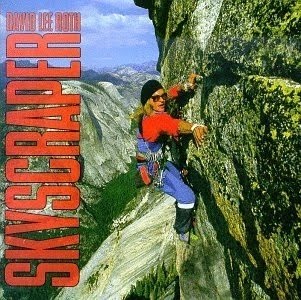 |
| Did you know David Lee Roth was a climber? If you're under 30 do you actually know who he is? |
At the Coolum Sendfest, I peered across and saw the red tag was still on, swaying in the breeze mockingly. I emailed Will asking his intentions with the project. Would he come back and finish it, or would he open it for all comers to try?
In answer, and to make it fair for everyone, he posted an "Open For Business" announcement on qurank, the Queensland Climbing Forum. The race was on. We drove the 1hr 45min the very next morning and I raced up the hill expecting a queue. A first ascent going begging! Surely the hoards would be swarming all over it?
I needn't have worried. We were the first at the cliff and on the second try after some chalking and brushing, I sent the new route at the modest grade of 26/7b+. It has some of the wildest holds of any route, anywhere - just see the photo below.
Will did all the hard work, he has naming rights.

Thanks Will, you're a gentleman.

Will has named the route Nuts In High Places
Tee: CLIMB T-shirt by boulders+nuts
Shorts: Thailand Billabong knock-off's
Left leg: New, Hybrid Kneebar Pad by Upskill Climbing
Right leg: Upskill Undersock and Friction Kneebar Pad
Harness: BD Chaos
Shoes: Andrea Boldrini Talisman Lace


 |
| Me, first ascent of Gay Pride 29/8a at The Pulpit today. The business begins where I am now. A bulging, smooth shield of stone with cool little edges. Skip that clip and do the ninja move. Or you may do the cowboy move. Are you a ninja or a cowboy? |
Ethan Pringle - Spicy Dumpling 5.14d Photoshoot
Posted by Lee Cujes Labels: Climbing Report, In The Press, New RoutesI've just this minute returned to Hong Kong after a whirlwind four day trip to Yangshou, China. John O'Brien (JJ) and I headed here with our crew to just get a taste of the limestone on offer. We weren't dissapointed.
We were also pleased to have the opportunity to shoot pics of Ethan Pringle cleaning up an old Chris Sharma project (Dumpling of all Evil) at White Mountain which has now been dubbed Spicy Dumpling. At 5.14d, 9a, 35 whatever you want to call it, it's haaard and impressive, and clocks in as China's hardest climb.
After watching Ethan break a hold two moves from success two days earlier (see the falling shot below), I knew thre route was going to be in the bag. The best shots we've reserved for print, but here's some of the B-roll shots from JJ and I...
 |
| Tiny holds and very steep |
 |
| Huge moves |
 |
| A broken hold two moves from success |
 |
| Hanging from one foot for a rest - nice! |
 |
| The one foot hang |
So far, the news of Ethan's ascent is out on:
- Ethan's blog - read the whole story here
- 8a.nu Global homepage
- UKClimbing
- Petzl's Facebook page to 45,376 fans
- Deadpoint Magazine
- Climbing Narc
- Climbing.com
- Klettern (German climbing site)
South East Queensland is an interesting place to climb. It’s generally hotter than the southern states for most of the year, and in summer the humidity rarely gets below 70%. A few years ago, most climbers would just give up and go surfing from October until March, but now we have a place to go — that place is called Mt Coolum.
Read full article on Whipper.

From top left, clockwise: Matt Schimke on Weapon Of Choice 27/8, Oliver Rickford on Caught By The Fuzz 25, Matt Schimke on Antipump 27, Matt Schimke on Space Oddity 29, Allan Spadijer, Old Ian Elliot on Three Men and a Ladder 26, Terry. All photos © M Schimke or O Rickford.

Top L quarter clockwise from top L: Sasha Juvan, Lara and Aaron Jones, Helen Day sending Wholly Calamity, John O'Brien and Duncan Steel. Bottom L quarter from L: Lee Cujes on Bite The Hand That Feeds 31, John O'Brien on Evil Wears No Pants 30, Tom O'Halloran, Crag Crew on Australia Day (BBQ included!). Top R quarter: John O'Brien on Evil Wears No Pants 30. Bottom R quarter: Antoine Moussette. All pics © L Cujes except the one of me courtesy C Glastonbury.
Yesterday I managed to do the first ascent of my summer project at Coolum which I've named Bite The Hand That Feeds. Grade proposal: 31/8b.
In a cave where link-ups probably outnumber actual routes, this is one of the last remaining ground to top, independent lines of the cave and for this reason, I'm super psyched to have done it.
I equipped the line in October 2009, and have worked on it anywhere from a couple to a handful of days per month for the last five months. Fifteen days all up, including a couple of days equipping.
The climb starts about five metres right of Evil Wears No Pants (in fact, you can see Vince working Evil in the photo below) and has a hard boulder right off the ground (see pic). You have to shove a couple of fingers into a slot, torque them, and load it up with close to full bodyweight to do the next move. That section culminates with a dyno to a sloping horn, and a powerful mantle to get established in a big scoop.
-edit2.jpg)
Bunched, crossed up moves lead right, and then the second hard problem - a body-tensiony move to snag the arete and a crap crimp and get your feet sorted without cutting loose. This was a move that was very hard to predict for me. One day I tried it three times and did it twice. The next day I tried it 10 times and failed every time. Good bridging flexibility helps here too. A crazy kneebar above the head allows you to roll around somehow onto the "slab" and a shake stance.
The slab is actually about 10 degrees overhung, but it does feel like a slab when you're up there. It has one tricky deadpoint which I would often fall on, and then you make it to the final steep headwall of the route. There's one mega kneebar where you can chalk up, and then you move up into a crescent shaped undercling with your right hand. Problem is, you need to get your knee in there, so you end up doing a dynamic hand-knee switch. It makes me laugh almost every time. I can't believe you have to do that, I've never had to do that move before on another route. If you botch it or the knee doesn't stick, you're gone.
The final hard moves are on these really sloping, perfectly smooth and flat, large edges. The key to using them is to have toe-hooks locked in. If you lose tension, you're gone. As you work up to higher flat edges, you have to bring your toehooks up, but they are blind, so you do a blind stab with your foot and hope you nail it. It's a cool move in itself. And then the finale is a punch to an incut rounded bucket where you can cut loose and celebrate.
Thanks to everyone who has held my rope on this, particularly on the start where I would endlessly fall off and crash into my belayer (JJ, Duncan, Aaron, Sasa, Matt S). Thanks to Dazza and Gareth for the early work they did bolting a bit of the start and finish of the route - that made it easier to establish.
I think it probably is that next step up in difficulty from Evil (which is top-end 30), but it's quite hard to grade these kind of bouldery routes, so time will tell.
Vietnam 2009: Trip Video - VietBLAM!
Posted by Lee Cujes Labels: Bolting, Climbing Camp: 2009 Vietnam, New Routes, VideosIf a picture tells 1,000 words then this video should tell about half a million.
Upskill Climbing VietBLAM 2009 (Climbing in Vietnam) from Upskill Climbing on Vimeo.
Keywords: vietnam climbing, slopony, vietnam dws, deep water soloing, dws
Vietnam 2009: My Way or the Railway 8a
Posted by Lee Cujes Labels: Climbing Camp: 2009 Vietnam, New Routes, VideosThis is a short clip of the hardest route I did in Vietnam. Happily, it was a first ascent. About three days of work went into the prepping, cleaning, bolting, working and sending.
The route is currently the second hardest sport route in Vietnam. It's about 30m long and is absolute primo quality. Grade 8a (29) but it might actually be harder as I relied heavily on locking down right gastons, which is one of my freak strengths at the moment due to the use of this grip on hard projects this year. I was super duper psyched about it!
Lee Cujes - My Way or the Railway - 8a first ascent - Vietnam from Upskill Climbing on Vimeo.
More Vietnam video to come.
Below The Belt
Posted by Lee Cujes Labels: Below The Belt, Climbing Report, Mental Training, New RoutesI posted a couple of months back about a new endurance project I was working on.
"The project in question was originally proposed by Mr Campbell in 2008, and set up by Mr Steel. It links the 15m Beastly Behaviour 8a/29 into the top 20m of One Hit To The Body 8a+/30, via a 13 move traverse to create a left tending line of epic proportions."
I'd done both routes individually a couple of years ago, but linking them together without a decent rest seemed insane. Beastly is one of the more bouldery and strength-intensive routes on the cliff, and One Hit is a cumulative fatigue route with a dynamic hit-or-miss crux up high.
I almost did it cleanly five sessions prior, falling three moves from the top. Since then, I never managed to get that high again. I was starting to dispair and really doubt myself and my approach. It also didn't help that the hot weather was moving in with a vengeance (32°C days). I'd planned to head to the Grampians in one week, therefore Sunday was my final chance to try the route before I left and it would be too hot once I returned, hence the final chance for the year.
Pressure on.
But no. The thing that had hurt me previously was my expectations around when I was going to do it. I knew if I was going to have any chance to do it, I would have to let all of that go, forget the outcome and just climb. And I did. After nearly three months of working the project and with no expectations, I clipped the anchors yesterday.
Below The Belt 30m 31/8b
- 29 attempts (+6 on Beastly in 2007, +10 on One Hit in 2007)
- 21 clean ascents of Beastly in the quest for the link
- Crap conditions: 29°C and minimal breeze
- 12 days of work over the ~3 months

One happy camper. Love this stuff. © S Cujes 2009
Well, finally back from a week in Townsville. Neil Monteith and I were greeted with 26°C temperatures, blue skies, and friendly locals to show us around. We wasted no time in dropping off our bags and heading straight out to our objective - Fredericks Peak.
Set amongst a desert-like backdrop (picture anthills and dry, dusty plains and scrub) Fredericks Peak is a collection of four main pinnacles up to 150m in height. Due to access issues like locked gates (and the five minute walk-in at the nearby Mt Stuart), climbing here has only been sporadic since the 90s. More recently, a solid access arrangement has been established, and regular climbing has been occurring since about 2003.
The climbing culture in Townsville is quite unique. The climbers are very active, and it would seem that nearly everyone is involved in putting up new routes! However the overall climbing level is fairly moderate, with only a small percentage of climbers regularly pushing beyond grade 21. I attribute this mainly to the style of the climbing on offer. Townsville is a mixed route haven (bolts and trad on the same climb), with relatively few purely sport routes on offer, and nothing above grade 26. Most of the climbing on offer is a mental rather than physical challenge. This was demonstrated amply to me on the first afternoon when Neil and I launched up what we thought was the crag classic Monkey On A String, a multipitch 23. I cruised through the mostly bolted, second pitch crux only to arrive on a slab where I was expecting a set of chains. No, there was 15m of near-vertical granite with no bolts and quite crap gear. I was quietly shitting myself. And then we found out that ours was actually the second ascent. Hmm!
To date, the routes that really get the traffic at Fredericks are the grade 15 and 17 five-pitch trad offerings. The quality is apparently very good on these. However, we were lured to the area with photos of large caves that looked perfect for modern sport climbing, so after descending, it was time to check them out. We weren't disappointed. There was two existing mini-routes in the main shaded cave which were done ground up, and stopped short of the steepness. It was obvious that a top-down approach was required, so the next day we made our way to the top of the South Sentinel and after several rappels gained the top of the cave. What followed was days of torture which only developers of extremely steep routes on extremely hard rock can appreciate.
 |
| Me bolting my first route, Townsvillians 25. © N Monteith 2009 |
I couldn't be happier with what we ended up with at the end of the week, with routes of every grade between 22 and 27 being established. The Hyper Bowl is an amazing piece of rock secreted away in the wilds that will now become the crucible of hard steep sport climbing in North Queensland. It seems to tick all the boxes with quality routes on bullet hard, highly featured rock (it's a type of granite believe it or not!) which stays in the shade all day. The cave itself is capped by an impressive 80m headwall. Potential for harder routes and endless extensions won't be exhausted any time soon. Visitors from cooler climates will choose July or August to come here, else dissolve in a puddle of sweat.
Thanks to everyone we met and were so hospitable to us during our stay.
Want more info? Check out the guide here. The best way will be to contact the locals if you're in the area and want to take a look. Christopher Glastonbury is one of the most active locals and a good central point of contact. He can be contacted at cglassy99 at hotmail dot com.
 |
| South Sentinel fool! At the base lies the Hyper Bowl, swathed in jungle. © L Cujes 2009 |
 |
| Neil 6th day in a row attempting his colossal White Gold extension. © L Cujes 2009 |
 |
| Neil sending his Metalicious 23. © C Glastonbury 2009 |
 |
| My first ascent of Hyperbowl 27, currently Townsville's hardest route, but not for long! © N Monteith 2009 |
.jpg) |
| Spain? Nope! Me on Hyperbowl 27.
© N Monteith 2009
|
The Upskill boat is pushing off for the sunny climes/climbs of North Queensland.
Team Upskill have teamed up with a local contingent. Crates of new routing hardware have already arrived on location and for the next week we aim to be hanging upside down, establishing what will certainly be the hardest and hopefully some of the most spectacular climbing in North Queensland.
I'll let you know how it goes.

Featured granite, with holds, and CAVES!


